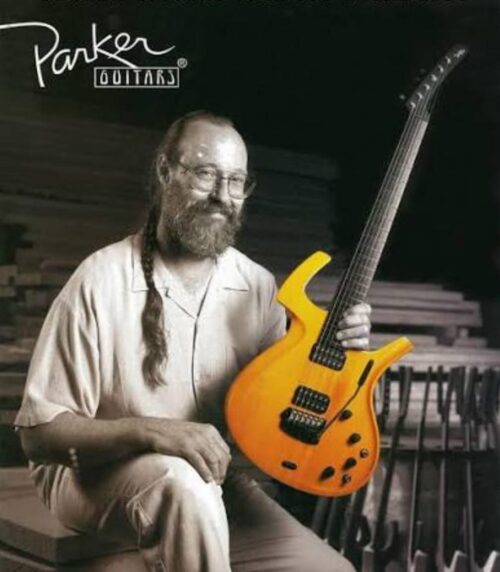
Few luthiers have ever pushed the limits of design and sound like Ken Parker — a man whose imagination forever changed the way guitars are built and played.
Born in 1952, Parker spent his life merging craftsmanship, science, and art in pursuit of one goal: to create instruments that truly disappear in the player’s hands. His passing on October 5, 2025, marks the end of an era for guitar innovation — but his influence will continue to shape music for generations.
The Parker Fly: A Revolution in Wood, Steel, and Carbon Fiber
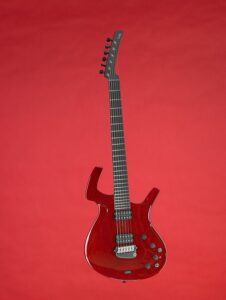
In 1993, Parker introduced the now-legendary Parker Fly, a groundbreaking electric guitar that fused traditional tonewoods with advanced composite materials.
The Fly stunned the industry with:
- A composite exoskeleton over a wooden core
- Stainless steel frets bonded to the fingerboard
- Piezo pickups for rich acoustic tones
- Ultra-light weight, often under 5 pounds
- Active electronics and a sleek, ergonomic neck
The result was a guitar that played with almost supernatural ease. It looked futuristic, felt effortless, and sounded like nothing else on the planet. The Parker Fly became an instant icon, earning fans among players who demanded both performance and precision.
Parker Archtops: Where Art Meets Engineering
After selling Parker Guitars, Ken turned his attention to acoustic design. His Parker Archtops took the same fearless creativity and applied it to the jazz world.
Each instrument was hand-built using violin-like principles, responsive tonewoods, and modern composites for excellent balance and sensitivity. One of these guitars now resides in the Metropolitan Museum of Art, standing not only as a masterpiece of luthiery but as a work of art in its own right.
A Mind Without Limits
Ken Parker’s philosophy was simple yet profound: build guitars that serve the music. He believed an instrument should feel so natural that it disappears, leaving only the player and the sound.
That idea inspired a generation of modern builders — from boutique archtop makers to ergonomic innovators. Even today, guitarists continue to chase the fluidity and lightness that Parker made real more than 30 years ago.
Personal Reflection: A Memory with Ken
Ken’s influence extends beyond his instruments — he’s left lasting impressions on those who’ve had the privilege to know him. The following story, shared by Bob Martin, captures Ken’s unique blend of craftsmanship, intuition, and heart.
Shared by Bob Martin
One time Ken and I were in Boston, at the museum that has one of his guitars. He was giving a lecture, and I was sitting behind him, trying my best to demonstrate what he was talking about. Later, we went back to his place, and I had another Fly with me that had a bent pot. I told Ken I’d been trying to straighten it with pliers and a screwdriver. He said, “Here, here, give me it.”
Ken took the Fly out of the case, set the guitar on a tree stump, went into the shed, and came back with a full-sized axe. He walked up to the guitar as if he were about to split it in half. Then, gently, he lowered the axe down onto the shaft of the pot, checked the alignment, and eased the axe into the opening. It was perfect — absolutely perfect. That’s Ken.
“Anyway, I miss you, buddy, and I love you.” — Bob Martin
Legacy
Ken Parker was more than a designer. He was a dreamer who saw potential in every piece of wood and wire. His guitars — from the Fly to his archtops — remind us that innovation and artistry can coexist beautifully. His passing is a loss, but his spirit hums in every note played on one of his creations.
To support the memorial and help honor Ken’s legacy, you can contribute here:
GoFundMe: Celebrating the Life and Legacy of Ken Parker
Planning an Event or Ready to Learn?
Jeremiah Williams provides live acoustic guitar and vocals for weddings, private events, and venues throughout South Central Pennsylvania, with travel available. He also offers personalized guitar lessons through B.E. Music Lab.
Written by Jeremiah Williams — musician, performer, and luthier enthusiast.