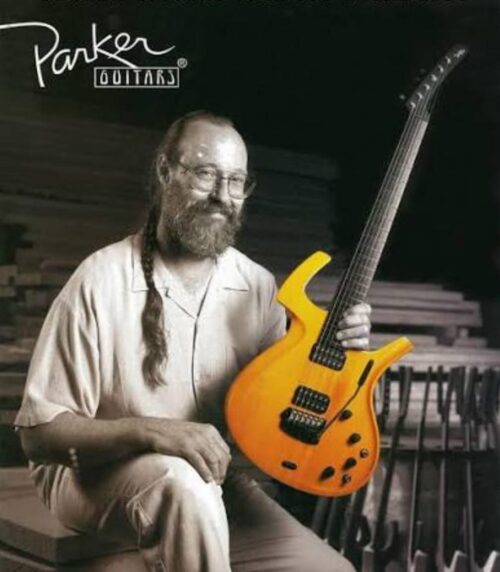
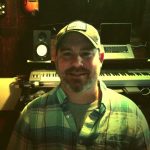
Ken Parker


Few luthiers have ever pushed the limits of design and sound like Ken Parker — a man whose imagination forever changed the way guitars are built and played.

Born in 1952, Parker spent his life merging craftsmanship, science, and art in pursuit of one goal: to create instruments that truly disappear in the player’s hands. His passing on October 5, 2025, marks the end of an era for guitar innovation — but his influence will continue to shape music for generations.


The Parker Fly: A Revolution in Wood, Steel, and Carbon Fiber

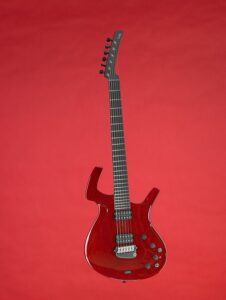
Parker Fly Guitar
Photo courtesy of the Smithsonian National Museum of American History

In 1993, Parker introduced the now-legendary Parker Fly, a groundbreaking electric guitar that fused traditional tonewoods with advanced composite materials.

The Fly stunned the industry with:

  • A composite exoskeleton over a wooden core
  • Stainless steel frets bonded to the fingerboard
  • Piezo pickups for rich acoustic tones
  • Ultra-light weight, often under 5 pounds
  • Active electronics and a sleek, ergonomic neck

The result was a guitar that played with almost supernatural ease. It looked futuristic, felt effortless, and sounded like nothing else on the planet. The Parker Fly became an instant icon, earning fans among players who demanded both performance and precision.


Parker Archtops: Where Art Meets Engineering

After selling Parker Guitars, Ken turned his attention to acoustic design. His Parker Archtops took the same fearless creativity and applied it to the jazz world.

Each instrument was hand-built using violin-like principles, responsive tonewoods, and modern composites for excellent balance and sensitivity. One of these guitars now resides in the Metropolitan Museum of Art, standing not only as a masterpiece of luthiery but as a work of art in its own right.


A Mind Without Limits

Ken Parker’s philosophy was simple yet profound: build guitars that serve the music. He believed an instrument should feel so natural that it disappears, leaving only the player and the sound.

That idea inspired a generation of modern builders — from boutique archtop makers to ergonomic innovators. Even today, guitarists continue to chase the fluidity and lightness that Parker made real more than 30 years ago.


Personal Reflection: A Memory with Ken

Ken’s influence extends beyond his instruments — he’s left lasting impressions on those who’ve had the privilege to know him. The following story, shared by Bob Martin, captures Ken’s unique blend of craftsmanship, intuition, and heart.

Shared by Bob Martin

One time Ken and I were in Boston, at the museum that has one of his guitars. He was giving a lecture, and I was sitting behind him, trying my best to demonstrate what he was talking about. Later, we went back to his place, and I had another Fly with me that had a bent pot. I told Ken I’d been trying to straighten it with pliers and a screwdriver. He said, “Here, here, give me it.”

Ken took the Fly out of the case, set the guitar on a tree stump, went into the shed, and came back with a full-sized axe. He walked up to the guitar as if he were about to split it in half. Then, gently, he lowered the axe down onto the shaft of the pot, checked the alignment, and eased the axe into the opening. It was perfect — absolutely perfect. That’s Ken.

“Anyway, I miss you, buddy, and I love you.” — Bob Martin


Legacy

Ken Parker was more than a designer. He was a dreamer who saw potential in every piece of wood and wire. His guitars — from the Fly to his archtops — remind us that innovation and artistry can coexist beautifully. His passing is a loss, but his spirit hums in every note played on one of his creations.

To support the memorial and help honor Ken’s legacy, you can contribute here:

GoFundMe: Celebrating the Life and Legacy of Ken Parker


Written by Jeremiah Williams — musician, performer, and luthier enthusiast. 


Famous Guitarists from Pennsylvania: A Legacy of Strings and Sound

Pennsylvania has long been a quiet powerhouse in American music. While cities like Nashville, Austin, and Los Angeles often get the spotlight, the Keystone State has produced its share of influential musicians—especially guitarists who have left their mark across rock, folk, blues, and beyond. Here are some of the most notable guitarists with Pennsylvania roots:

1. Joe Perry (Aerosmith) – Lawrence County, PA

Though often associated with Boston, Joe Perry was born in Lawrence County, Pennsylvania. As Aerosmith’s lead guitarist, Perry is celebrated for his raw blues-rock style, which has fueled classics like “Walk This Way” and “Sweet Emotion.” His riffs helped define ‘70s hard rock and continue to inspire generations of guitarists.

2. C.J. (Chad) Snare – Pittsburgh, PA

Best known as the vocalist and keyboardist for the melodic rock band FireHouse, Chad Snare is also an accomplished guitarist from Pittsburgh. His versatility across instruments speaks to the multi-faceted talent often found in the Pennsylvania music scene.

3. Tommy Conwell – Philadelphia, PA

A beloved figure in the Philly rock and blues circuit, Tommy Conwell made waves in the late ‘80s and early ‘90s with Tommy Conwell & The Young Rumblers. His guitar playing is gritty, soulful, and full of energy—equal parts blues swagger and rock firepower.

4. David Uosikkinen (The Hooters) – Philadelphia, PA

While best known as the drummer for The Hooters, the band’s iconic guitar-driven sound—melding rock with folk influences—owes much to their Philadelphia origins. The Hooters’ success in the ‘80s brought international attention to Pennsylvania’s thriving rock scene.

5. Brett Michaels (Poison) – Butler, PA

Though most fans know Bret Michaels as Poison’s frontman, he’s also a guitarist and songwriter who helped shape the glam metal era of the ‘80s. From “Every Rose Has Its Thorn” to high-energy anthems, his work put Butler, PA, on the rock ‘n’ roll map.

6. Ray Toro (My Chemical Romance) – Kearny, NJ / Philadelphia ties

With strong roots in the region, Ray Toro’s guitar work in My Chemical Romance defined a generation of emo and alternative rock. His soaring leads and layered textures on albums like “The Black Parade” elevated the band to iconic status.

7. Pete Anderson – Detroit by birth, raised in PA

Though born in Detroit, Pete Anderson grew up in Pennsylvania before becoming Dwight Yoakam’s longtime guitarist and producer. His twangy, Bakersfield-influenced style helped revive country music in the ‘80s and ‘90s while still keeping one foot in rock and blues traditions.

8. Brett Alexander (The Badlees) – York, PA

As guitarist and songwriter for The Badlees, Brett Alexander crafted the jangly, roots-rock sound that earned the band national recognition in the ‘90s. Their music, often compared to acts like Hootie & The Blowfish, showcases Pennsylvania’s ability to produce heartfelt, authentic rock with storytelling at its core.

A Rich Guitar Tradition

From blues-rock legends to alt-rock innovators, Pennsylvania guitarists reflect the diversity of American music itself. Whether it’s a smoky bar in Philly, a festival stage in Pittsburgh, or a small-town jam in the Susquehanna Valley, the state’s six-string legacy continues to inspire new generations of players.

famous guitarists of PA
Notable guitarists of PA

Here are some of the most notable guitarists with Pennsylvania roots:

Harrisburg's Musical Legacy

From Jazz Legends to Modern Revival

When most people think of Harrisburg, Pennsylvania, the first things that come to mind might be government, history, or the Susquehanna River. But tucked into this capital city is a surprisingly rich and colorful musical history—one that stretches from the days of jazz greats like Duke Ellington to the symphonic grandeur of the Harrisburg Symphony Orchestra, and right into today’s thriving live-music scene.


A Jazz Stop on the Tour

Back in the mid-20th century, Harrisburg was more than just a dot on the map for touring musicians. The city had a vibrant nightlife with venues like the Madrid Ballroom, the Coliseum, and the Hi-Hat, where jazz giants including Duke Ellington and Dizzy Gillespie once performed.

But segregation shaped this story, too. Black artists who couldn’t stay in downtown hotels often found refuge at the Jackson Hotel in the city’s 7th Ward. That little hotel became a hub for some of the greatest musicians of its day—an overlooked but powerful reminder of Harrisburg’s place in the jazz world.

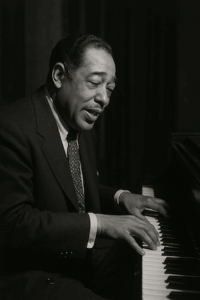
Duke Ellington at Piano

Jazz legend Duke Ellington—who once played Harrisburg.

The City’s Classical Heartbeat

While jazz was swinging downtown, Harrisburg was also building a reputation for classical music.

  • The Harrisburg Choral Society, founded in 1895, is still going strong more than a century later.
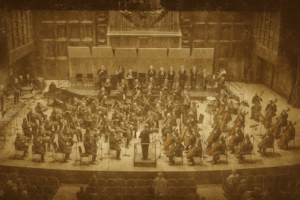
  • The Harrisburg Symphony Orchestra gave its first concert in 1931 and has been performing in the magnificent Forum Auditorium ever since.

orchestra

The Forum Auditorium: home of the Harrisburg Symphony Orchestra.

Stages of the Past

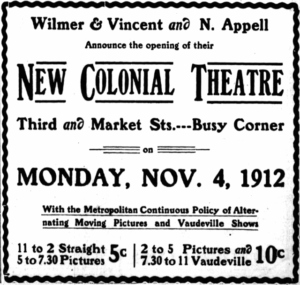
Music in Harrisburg wasn’t just about concert halls. The Colonial Theatre, first built in the 1830s and remodeled in 1912, hosted vaudeville and musical acts for decades. Though closed since 1976, its presence reminds us that live performance has always had a home here.

The long-closed Colonial Theatre remains part of Harrisburg’s cultural memory.

Festivals on the Riverfront

Harrisburg has long celebrated music in the open air. For years, the July 4th American MusicFest drew tens of thousands of people to Riverfront Park and City Island for concerts under the fireworks. Today, that spirit continues through ArtsFest, the Central Pennsylvania Jazz Festival, and Kipona—events that turn the city into a stage.

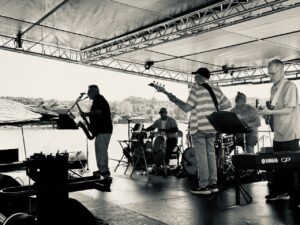
Jazz Band LaCucina
Marco Marcinkos Latin Jazz Quintet      Tom Hamilton, Ruben Ariola, Paul Rostock, Marko Marcinco, Tom Kozic. 


Riverfront Park, where Harrisburg festivals still bring music to the city.

The Revival: A City That Still Sings

By the early 2000s, Harrisburg’s music scene was reborn. H·MAC (Harrisburg Midtown Arts Center) transformed a historic building into a multi-venue performance space. Whitaker Center brought Broadway shows and live concerts to downtown. And thanks to partnerships with Harrisburg University, touring bands and emerging artists now make Harrisburg a regular stop.

Walk through Midtown or Downtown today and you’ll find jazz jams, indie shows, and gospel choirs filling bars, churches, and theaters alike. Harrisburg isn’t just remembering its musical past—it’s still writing it.

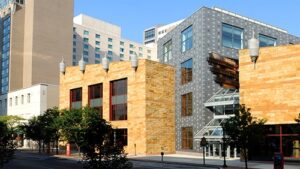
Whitaker Center

The Whitaker Center: blending science, art, and live music.

Why It Matters

Harrisburg’s story is proof that music is more than entertainment—it’s community, resilience, and identity. From jazz legends who once stopped here to the voices still echoing in churches and clubs, this city has always had rhythm. You just need to know where to listen.

✨ So the next time you walk along the Susquehanna, imagine the sounds that have passed through this city—the brass of Ellington, the harmonies of Mendelssohn, the cheers from a festival crowd. Harrisburg has always been more musical than you might think.


The Musical History of Harrisburg, Pennsylvania

Harrisburg, the capital city of Pennsylvania, has a surprisingly rich and diverse musical history. While it might not be as famous as Philadelphia or Pittsburgh for its cultural scene, Harrisburg has fostered a variety of musical traditions that continue to shape its identity today.

Early Roots: Parlor Music and Local Bands

In the 19th century, Harrisburg saw a rise in parlor music, community singing, and small local ensembles. Amateur musicians often performed in homes, churches, and civic gatherings, reflecting the strong role music played in daily life. Brass bands and marching bands became especially popular during and after the Civil War, with many civic organizations sponsoring their own groups.

The Whitaker Center and Modern Growth

The Whitaker Center for Science and the Arts, which opened in 1999, became a hub for live performances and cultural programming. Hosting jazz, classical, and contemporary artists, it has solidified Harrisburg’s reputation as a destination for quality music in central Pennsylvania.

The Harrisburg Symphony Orchestra

Founded in 1931, the Harrisburg Symphony Orchestra remains one of the city’s most important cultural institutions. Known for its exceptional performances of classical and contemporary works, it has helped keep orchestral music alive and thriving in the region.

Jazz and Blues Influence

Throughout the 20th century, Harrisburg was home to a thriving jazz and blues scene. Clubs and bars along Third Street and throughout the city regularly hosted touring musicians, as well as local performers. Jazz festivals have been an ongoing tradition, highlighting the city’s deep appreciation for the genre.

Folk, Rock, and Indie Scenes

Like many American cities, Harrisburg saw a rise in folk and rock music during the 1960s and 70s. Coffeehouses, small venues, and college stages provided a home for local songwriters and bands. In recent years, indie and alternative music scenes have grown in the city, supported by local venues and organizations dedicated to live performance.

Conclusion

While it may fly under the radar compared to larger cultural hubs, Harrisburg has a vibrant musical history that spans from parlor songs and marching bands to symphony halls and jazz clubs. The city’s dedication to live performance continues to make it a significant part of Pennsylvania’s cultural landscape.

Jeremiah Williams in Studio

What Key Is This Song In?

“Sweet Child Of Mine” by Guns and Roses

What key is “Sweet Child Of Mine” by Guns and Roses?

Well the sheet music says D, however, the notes of a D scale include a C# and the song has a C in the chord progression how does one understand how to communicate to your band what key the song is in?

This seem to spell out G major, but this is not what the ear hears. The ear hears a pull to D. How’s that possible? Let’s take a deeper look.

How could such a simple 3 chord progression cause so much confusion? Let’s take “Sweet Child of Mine” by GNR. The verse goes D Major – C Major – G Major – D Major . To a lazy theorist, this seems like it’s all in the Key of G Major. But upon further investigation, this is not the whole story.

If we analyzed the song in G in Roman Numerals diction it is V IV I V. Yes, all the notes would fit, but playing a G Major scale (G Ionian mode) from G to G doesn’t quite fit the tonality closely enough.

Now let analyze the song in D Major. But wait, you say there is a C# in D and there exists a C in the Chord Progression. This stumped me a bit as well. But on further inquiry, I have found the answer.

If we analyze this in Roman Numerals, we get an ( I – bVii – IV – I ) progression in D Major. Wait? That doesn’t exist in any Diatonic chord progression, but yet in rock and roll music, it is fairly common, so there must be an answer as to why it sounds so awesome when it resolves to D Major.

If you said it’s a Plagal Cadence congratulations you are a not a lazy theorist. It definitely is a Plagal Cadence.
( IV – I ) But then how can you explain the C chord since D Major has a F# and C# so it obvious that a C chord wouldn’t belong diatonically they since it must be sharped?

According to my in-depth sources, it is considered a double Plagal Cadence. This is something I have not yet come across although I have been playing the song for 20 years. I thought it was in G Major my whole life. Why not?

After All, the notes of G Major do fit properly over the chords. But it doesn’t resolve to G, it resolves to D. And the answer to the 10 million dollar question is this:

The C Major chord is an ( IV/IV ) which in layman’s terms means it’s a 4 of a 4 chord. So to re-analyze correctly in the key of D. We have an ( I – IV/IV – IV – I ) progression.

Therefore to solo over this progression, one simple answer would be to use the D Mixolydian mode from D to D because it contains the following notes ( D, E, F#, G, A, B, C ).

Most importantly the ear should be the final say in these situations and you can hear the song pulling to the D.

Enjoy the song in a new light if you haven’t already. To me. It’s one of the coolest songs ever written.

So what key is Lynrd Skynrd’s “Sweet Home Alabama in?” Lol

– JW